
Cheapest Car Insurance — Montana
Free to compare
Finding the Lowest Premium for Multiple Vehicles in Montana
You own two or more vehicles in Montana, and you need to know which carrier writes the lowest combined premium for your household while meeting the state's $25,000 bodily injury per person, $50,000 per accident, and $20,000 property damage minimums. You've heard that multi-car discounts save money, but you're not sure whether combining policies actually lowers your total cost or whether your current setup already delivers the best rate.
The answer depends on how Montana carriers structure their multi-vehicle pricing. Most carriers apply a multi-car discount only when every vehicle sits on one policy, garaged at the same address, and titled to the same household. Adding a second or third car mid-term re-rates the entire policy rather than simply tacking on a flat amount, which means the discount you expected can disappear if the new vehicle's risk profile pushes your household into a different rating tier.
“Combining two policies mid-term re-rates every vehicle on the account, sometimes erasing the multi-car discount gain.”

Meet Montana's Requirements Without Overpaying
Get My Montana Car Insurance Quote$1,154.92
Montana Annual Auto Expenditure Per Vehicle
Montana drivers paid an average of $1,154.92 per insured vehicle in 2023, one of the lowest state averages in the country. Multi-vehicle households often pay less per car when policies are consolidated, but the total depends on each vehicle's rating factors.
NAIC Auto Insurance Database Report 2023
Why the Multi-Car Discount Requires One Policy
The multi-car discount is not automatic. It applies only when every vehicle in your household is listed on the same auto insurance policy. If you and a spouse each carry separate policies, or if a household member's car sits on a policy of its own, the discount does not apply to either policy. Combining those policies into one account is the only way to unlock the discount.
Montana carriers calculate the discount by reducing the per-vehicle premium when multiple cars share the same policy. The discount typically applies to the second vehicle and beyond, not the first. The exact percentage varies by carrier and is not published in rate filings, so the only way to know which carrier offers the steepest discount for your household is to compare quotes with every vehicle listed on one policy.
Consolidating policies mid-term triggers a full re-rating. The carrier recalculates the premium for every vehicle on the account using the household's combined driving records, the vehicles' risk profiles, and the new policy's coverage selections. If one vehicle carries a recent claim or a driver with a violation, the re-rating can increase the premium for every car on the policy, sometimes offsetting the multi-car discount entirely.
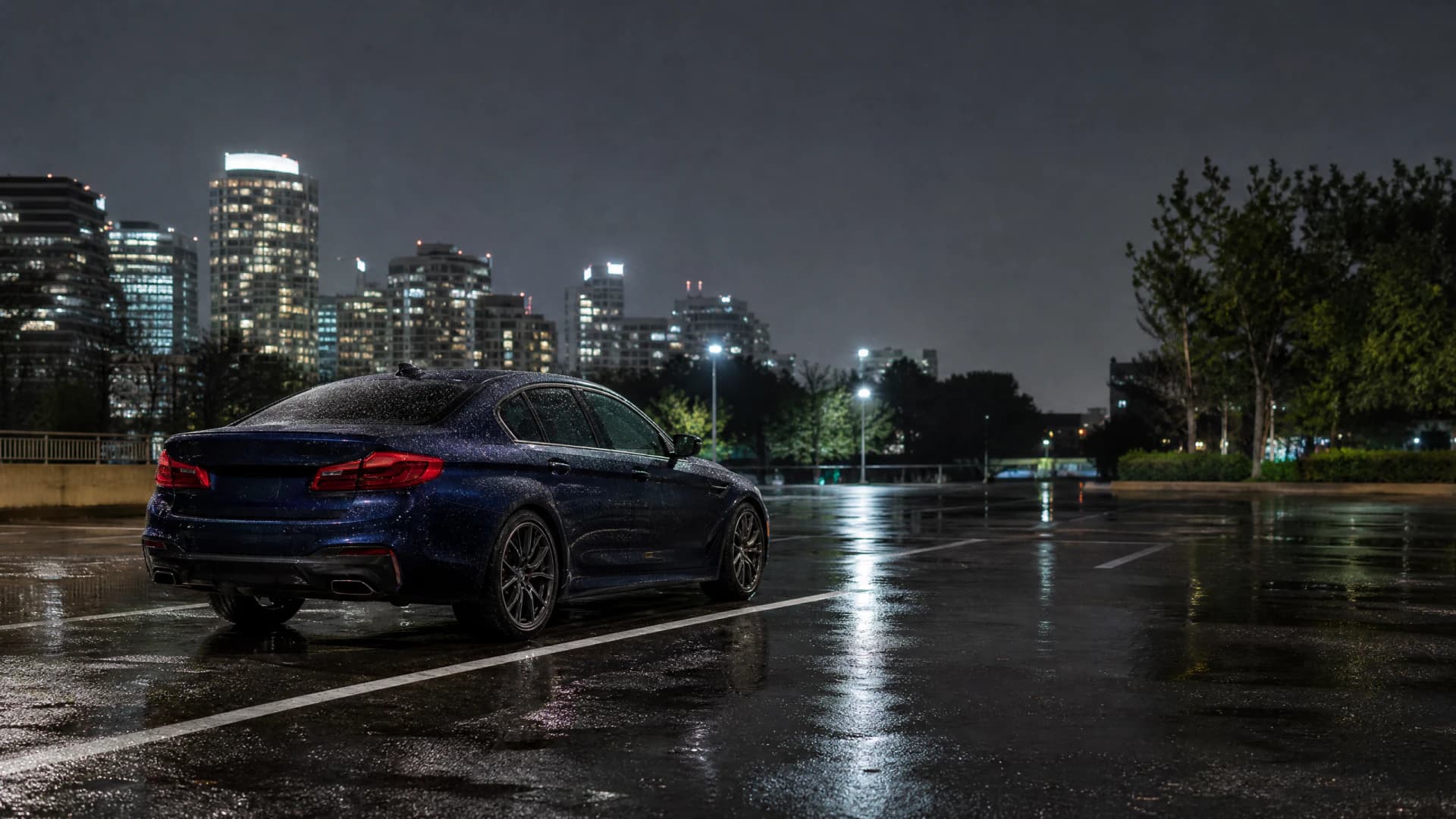
Combining two policies mid-term re-rates every vehicle on the account. The multi-car discount applies only after the re-rating completes, and the net result may not lower your total premium.




How Adding a Vehicle Mid-Term Changes Your Premium
Most Montana carriers allow you to add a newly purchased vehicle to your existing policy within a grace period, typically 14 to 30 days. During that window, the new vehicle is covered under your current policy's liability and physical-damage coverages, but only if you notify the carrier before the grace period expires. Missing the notification deadline can leave the new vehicle uninsured, and a claim filed after the grace period may be denied.
Adding the vehicle triggers a mid-term re-rating. The carrier recalculates the premium for every vehicle on the policy using the new vehicle's year, make, model, garaging address, and the household's combined driving records. If the new vehicle is a high-theft model, a sports car, or a truck with a higher liability risk, the re-rating can increase the premium for every car on the policy, not just the newly added one.
The multi-car discount applies to the new vehicle only after the re-rating completes. If the re-rating increases your base premium more than the discount reduces it, your total cost rises. The only way to know the net effect is to request a quote with the new vehicle included before you finalize the purchase. Carriers provide binding quotes that show the exact premium with the new vehicle added, so you can compare the total cost across carriers before committing.
16 carriers
Montana Auto Insurance Carriers
Sixteen carriers write auto insurance in Montana across standard, preferred, and non-standard tiers. Multi-vehicle households should compare quotes from at least three carriers in their tier to find the lowest combined premium, because discount structures and base rates vary widely.
Montana Commissioner of Securities and Insurance carrier roster

Comparing Carriers for Your Household's Vehicle Mix
The carrier that writes the lowest premium for a single vehicle often does not write the lowest premium for a multi-vehicle household. Discount structures vary: some carriers apply a flat percentage to the second and third vehicles, others reduce the base rate for every car on the policy, and a few tier their discounts so the third vehicle receives a steeper discount than the second. The only way to identify the lowest total cost is to request quotes from multiple carriers with every vehicle listed on one policy.
Montana's $25,000/$50,000/$20,000 minimum liability limits are the floor, not the ceiling. Households with two or more vehicles often carry higher limits to protect household assets in a multi-vehicle accident. Compare quotes at multiple coverage levels to see which carrier writes the lowest premium for the coverage your household actually needs.
Compare Montana Carriers for Your Vehicles
Request quotes from at least three Montana carriers with every vehicle in your household listed on one policy. Provide each carrier with the same coverage selections, the same liability limits, and the same deductibles so the quotes are comparable. The carrier that writes the lowest combined premium for your household's vehicle mix, driving records, and garaging address is the one that delivers the cheapest car insurance for your situation. Compare quotes annually, because carrier pricing changes and your household's risk profile shifts as vehicles age and drivers accumulate clean years.
Which Montana Carriers Write Multi-Vehicle Policies
Standard-tier carriers writing multi-vehicle policies in Montana include State Farm, Geico, Progressive, Allstate, Farmers, Nationwide, Liberty Mutual, National General, and Travelers. These carriers typically require clean driving records and no recent at-fault claims. Preferred-tier carriers include USAA (military-affiliated households only), Amica, and CSAA (AAA members only). Preferred carriers often write the lowest per-vehicle premiums for households with no violations, but membership or affiliation restrictions apply.
Non-standard carriers Bristol West and The General write multi-vehicle policies for households with recent violations, lapses in coverage, or drivers who cannot qualify for standard-tier rates. Non-standard carriers charge higher base premiums but still apply multi-car discounts when every vehicle sits on one policy. Two newer entrants, Root and Hartford, write in Montana and offer online quoting for multi-vehicle households, though their discount structures vary.
Get Your Free Quote
Get My Montana Car Insurance QuoteFrequently Asked Questions
Does Montana require uninsured motorist coverage for multi-vehicle policies?
No. Montana does not mandate uninsured-motorist coverage, but 7.2% of Montana drivers are uninsured, so many multi-vehicle households add it voluntarily. The coverage applies to every vehicle on the policy when one policy covers all household cars.
Can I insure two vehicles on separate policies in Montana?
Yes, but you forfeit the multi-car discount. Montana carriers apply the discount only when every vehicle sits on one policy. Separate policies mean each vehicle pays the full single-car rate with no discount.
Which Montana carrier writes the cheapest multi-vehicle policy?
No single carrier writes the lowest rate for every household. Discount structures and base rates vary by carrier, vehicle mix, and driving records. Compare quotes from State Farm, Geico, Progressive, and at least one preferred or non-standard carrier depending on your household's tier.
How does adding a third vehicle change my Montana auto insurance premium?
Adding a third vehicle triggers a mid-term re-rating that recalculates the premium for every car on the policy. The multi-car discount applies to the third vehicle, but the re-rating can increase the base premium if the new vehicle is high-risk. Request a binding quote before adding the vehicle.
Do Montana multi-car discounts apply to motorcycles?
Most Montana carriers exclude motorcycles from the multi-car discount because motorcycle policies are rated separately from auto policies. A few carriers bundle motorcycle and auto policies under one account, but the discount structure differs. Ask your carrier whether motorcycles qualify.