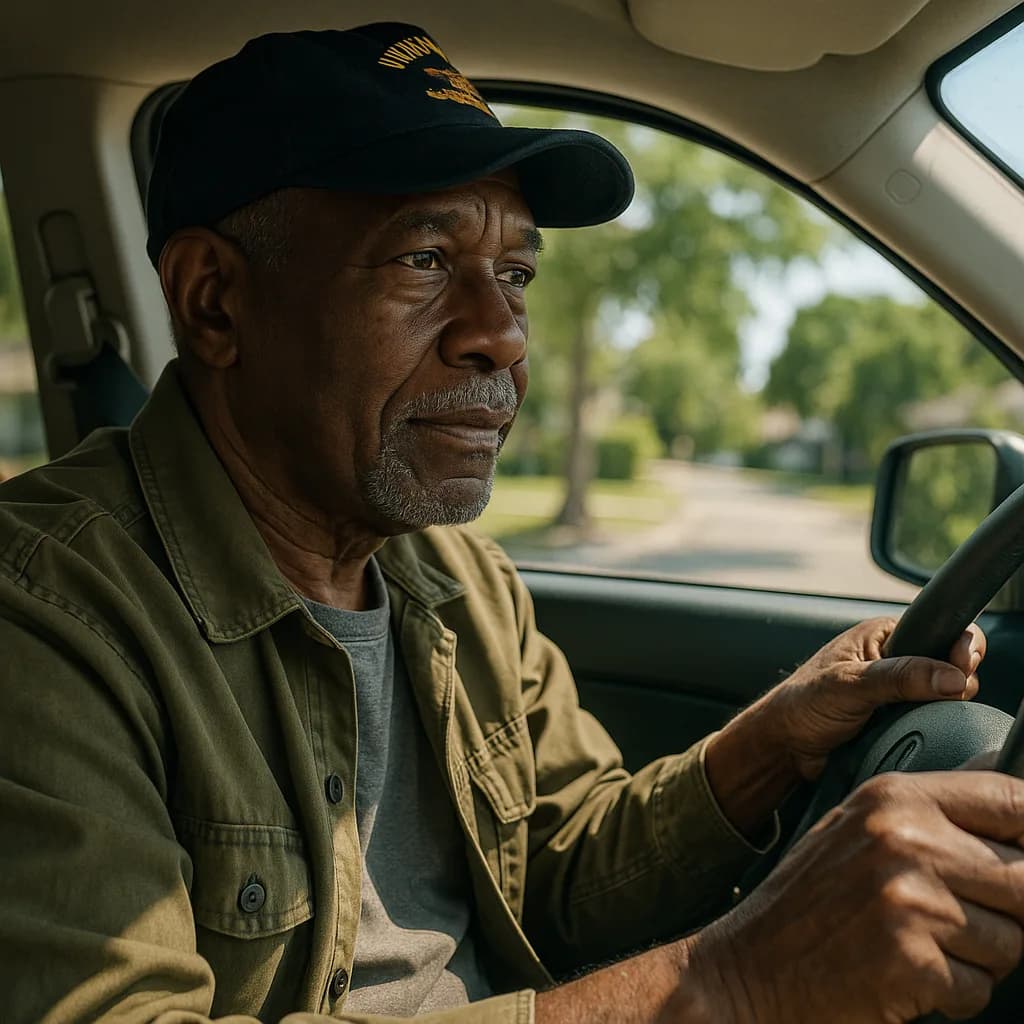
When One Uninsured Driver Hits Multiple Cars
You're structuring coverage for two or more vehicles on one Montana policy and evaluating whether uninsured motorist (UM) protection is worth adding. The state doesn't mandate it — Montana law requires only $25,000 per person and $50,000 per accident in bodily injury liability, plus $20,000 in property damage — but 7.2% of Montana drivers carry no insurance at all. When an uninsured driver causes a collision, your liability coverage pays nothing because it protects others from your actions, not you from theirs. Without UM coverage on your own policy, you pay repair bills, medical costs, and lost wages out of pocket.
The decision becomes more complex when you own multiple vehicles. Does one UM policy limit cover every car in your household, or does each vehicle carry its own separate limit? Can you combine limits from multiple cars to cover a single severe injury? Montana's stacking rules and per-policy structure determine how much protection you actually have when an uninsured driver causes serious harm to someone in your household.
Compare car insurance rates in your state
Get quotes from licensed carriers — no obligation, no spam, results in minutes.
Get Your Free QuoteMontana Uninsured Drivers
7.2%
One in fourteen Montana drivers operates without insurance. The state does not require uninsured motorist coverage, leaving households that decline it fully exposed to repair and medical costs when an at-fault driver carries no policy.
Insurance Information Institute, 2023
How Uninsured Motorist Coverage Works Across Multiple Vehicles
Uninsured motorist coverage sits on your auto policy and pays when an at-fault driver has no insurance or insufficient limits to cover your damages. It includes two components: uninsured motorist bodily injury (UMBI), which covers medical bills, lost wages, and pain and suffering for you and your passengers, and uninsured motorist property damage (UMPD), which pays for vehicle repairs. Montana does not require either, but carriers licensed in the state must offer both at the time you purchase or renew a policy.
When you insure multiple vehicles on one policy, the UM coverage applies per occurrence, not per vehicle. The limit does not multiply by the number of vehicles on your policy unless you purchase stacked coverage, which Montana allows under specific conditions.
Stacking means combining UM limits from multiple vehicles to increase total available protection. Montana permits stacking only when you explicitly purchase it and only for bodily injury — property damage limits do not stack. Not every carrier offers stacking, and those that do charge a higher premium because the total exposure increases. If your policy does not include stacking language, each accident is covered by a single set of limits regardless of how many vehicles you own.
Montana allows UM stacking for bodily injury only when explicitly purchased.
Choosing Limits for a Multi-Vehicle Household
Start by comparing your UM limit to your liability limit. A common approach: match your UM bodily injury limit to your liability limit so you have the same protection inbound that you provide outbound. For property damage, Montana's $20,000 minimum liability often falls short of the actual value of two or more vehicles — if an uninsured driver totals your car, UMPD pays only up to your selected limit, and the gap comes from your own funds.
Stacking adds cost but increases total available protection. That difference matters in severe multi-injury collisions where medical bills and lost wages exceed a single policy limit. Stacking premiums vary by carrier — some charge a flat fee per vehicle, others calculate it as a percentage of the base UM premium. Compare the added cost against your household's total medical and income exposure to decide whether stacking fits your risk tolerance.
Related Articles


When Uninsured Motorist Property Damage Applies
UMPD pays for vehicle repairs when an uninsured driver causes a collision and you can identify the at-fault party. Montana requires proof of the other driver's identity and fault before UMPD pays — if the driver flees the scene and you cannot provide a license plate, name, or police report identifying them, UMPD typically does not cover the loss. That gap is where collision coverage becomes relevant: collision pays for damage to your vehicle regardless of fault and regardless of whether the other driver is identified, insured, or even present.
For households insuring multiple vehicles, the decision often comes down to vehicle value and deductible structure. Collision covers hit-and-run scenarios, single-vehicle accidents, and collisions with uninsured drivers you cannot identify, but it costs more and typically carries a $500 or $1,000 deductible. Many multi-vehicle households carry both: UMPD for the lower deductible when the driver is known, and collision for comprehensive protection across all damage scenarios.
Conversely, if you drop collision on a paid-off car to save premium, UMPD becomes the only coverage that pays for damage caused by an uninsured driver — and only if you can identify them. Evaluate each vehicle's value, your deductible tolerance, and the likelihood you could identify an at-fault driver in a collision before deciding which coverage to carry on each car.
Montana Minimum Liability
$25,000 / $50,000 / $20,000
Montana requires $25,000 per person and $50,000 per accident in bodily injury liability, plus $20,000 in property damage. These minimums protect others from your actions but provide no coverage when an uninsured driver injures you or damages your vehicles.
Montana Motor Vehicle Division
Underinsured Motorist Coverage and Multi-Vehicle Policies
Underinsured motorist (UIM) coverage works alongside UM and pays when an at-fault driver carries insurance but their limits are too low to cover your damages. Montana does not require UIM, but carriers must offer it when you purchase UM.
UIM stacking follows the same rules as UM stacking in Montana: you must purchase it explicitly, it applies only to bodily injury, and it increases total available protection by combining limits from multiple vehicles. UIM premiums are typically lower than UM premiums because the coverage applies only after the at-fault driver's policy is exhausted, reducing the carrier's exposure.
If you own multiple vehicles and carry stacked UM, adding stacked UIM ensures your household has layered protection: the at-fault driver's liability pays first, your UIM pays next up to your stacked limit, and your health insurance or out-of-pocket funds cover any remaining gap.
Compare Carriers That Write Multi-Vehicle UM Coverage
Not every carrier licensed in Montana offers stacked UM or UIM coverage, and those that do price it differently. Montana auto insurance carriers that write multi-vehicle policies include Allstate, Farmers, Geico, Liberty Mutual, National General, Progressive, State Farm, and USAA. When comparing quotes, ask each carrier whether they offer stacking, how they calculate the stacking premium, and whether stacking applies automatically to all vehicles on the policy or requires separate election per vehicle.
Request quotes with and without stacking to see the cost difference. The method affects total cost when you insure three or more vehicles.
Montana's online insurance comparison tools and independent agents can provide quotes from multiple carriers simultaneously, showing how UM and UIM premiums vary by household vehicle count, selected limits, and stacking elections. Compare the total annual premium for your multi-vehicle policy with and without UM, with and without stacking, and with different limit combinations to identify the structure that balances protection and cost for your household's specific risk exposure.