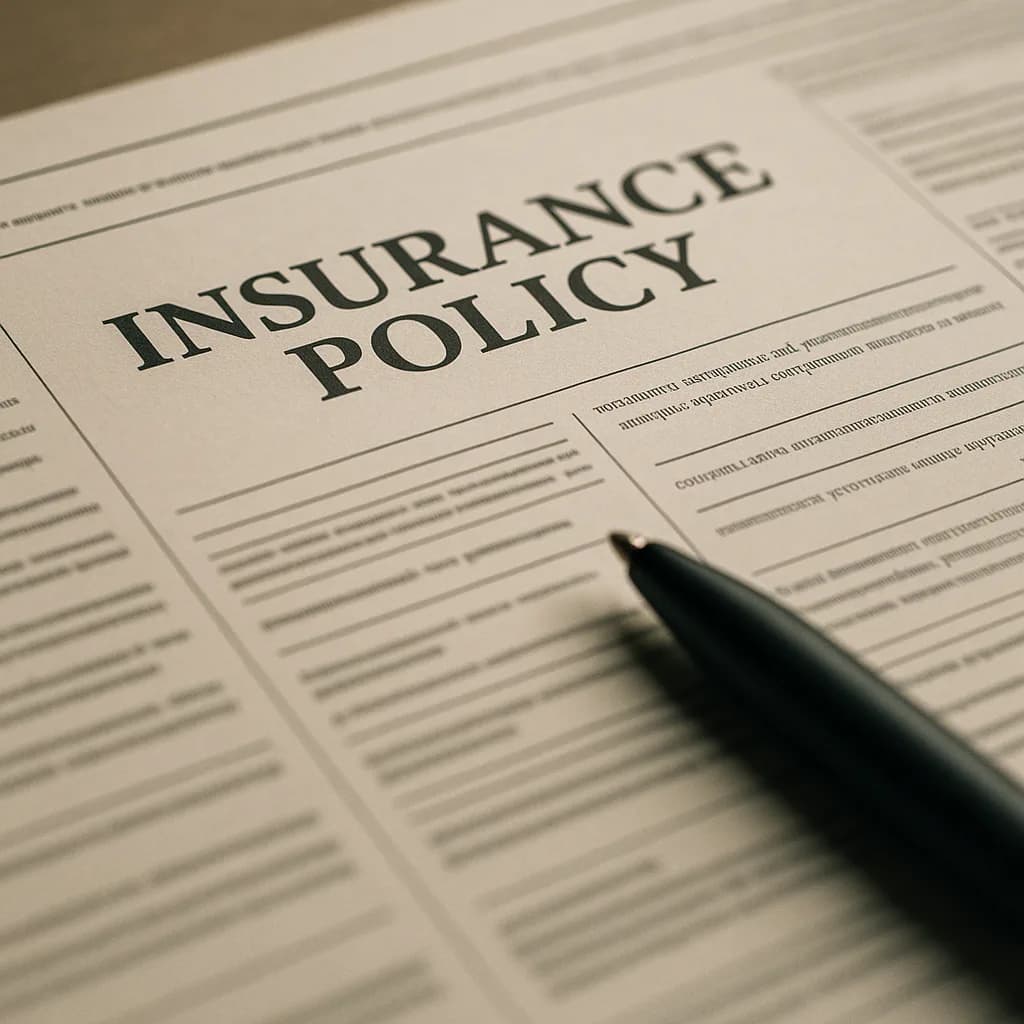
What Montana Accepts as Proof of Insurance
Montana law recognizes three forms of proof of insurance: a paper insurance card issued by your carrier, a digital insurance card displayed on your phone or other electronic device, and an SR-22 certificate filed electronically by your carrier with the Motor Vehicle Division. All three are legally equivalent under Montana Code Annotated 61-6-302, which means a law enforcement officer, DMV clerk, or registration agent must accept any of them during a traffic stop, at vehicle registration, or when verifying coverage after a lapse.
The catch: while Montana accepts digital proof statewide, the specific document you need varies by situation. A standard insurance card works for registration and traffic stops. An SR-22 certificate is required only when you're reinstating a revoked license or obtaining a Probationary Driver License after a suspension. Showing the wrong document—or showing a document that doesn't match the vehicle you're registering—can delay registration or result in a citation during a stop, even when you have active coverage on another car in your household.
Compare car insurance rates in your state
Get quotes from licensed carriers — no obligation, no spam, results in minutes.
Get Your Free QuoteMontana Minimum Liability Limits
$25,000 / $50,000 / $20,000
Montana requires $25,000 bodily injury per person, $50,000 bodily injury per accident, and $20,000 property damage. Your proof of insurance must show at least these limits to satisfy registration and legal-operation requirements.
Montana Code Annotated 61-6-103
Digital Insurance Cards: What Montana Law Requires
Montana statute does not prescribe a specific app, file format, or screen layout for digital insurance cards. Your carrier's mobile app, a PDF emailed to your phone, or a photo of your paper card all count as valid proof, provided the document displays your name, the vehicle identification number, the policy number, the coverage effective dates, and the liability limits. The law requires only that the document be readable and verifiable—not that it come from a specific source.
Law enforcement and DMV staff can verify coverage in real time through the Montana Motor Vehicle Division's electronic database, which receives daily updates from carriers writing policies in the state. When you show a digital card during a traffic stop, the officer typically cross-references your policy number and VIN against the database to confirm active coverage. At registration, the county treasurer's office performs the same check. This means a screenshot of your insurance card works as well as the carrier's app, as long as the information is current and matches the vehicle you're insuring.
One procedural quirk: if your phone battery dies during a traffic stop or your screen is cracked and unreadable, the officer may issue a fix-it ticket requiring you to present proof of insurance at the courthouse within a set window. Carrying a paper card as a backup eliminates this risk, especially on long trips through rural Montana counties where cell service is sparse and charging options limited.
A digital insurance card for Vehicle A does not prove coverage for Vehicle B, even when both are on the same policy. The VIN on the card must match the vehicle you're driving or registering.
Registration and Multi-Vehicle Households

Most carriers issue a separate insurance card for every vehicle on your policy, either as individual PDFs in your online account or as separate entries in the mobile app. Before heading to the county treasurer's office to register a second or third car, confirm that your carrier has generated a card for that specific VIN. If you added the vehicle mid-term and the card hasn't populated in the app yet, call your carrier and request immediate issuance. Registration cannot proceed without it, and the treasurer's office will send you home to obtain the correct document.
Montana does not require you to carry proof of insurance for every vehicle you own while driving—only for the vehicle you're currently operating. But at registration time, the mismatch between the VIN on your insurance card and the VIN on the title triggers an automatic rejection. This is the most common procedural failure for households registering a newly-purchased second or third car: they bring the insurance card for the car they drove to the DMV, not the card for the car they're registering.
Related Articles




SR-22 Certificates and Reinstatement Proof
An SR-22 is not a separate insurance policy. It is a certificate your carrier files electronically with the Montana Motor Vehicle Division confirming that you carry at least the state's minimum liability limits. Montana requires SR-22 filing for restoration of a revoked license or issuance of a Probationary Driver License after revocation, and the filing must remain active for 3 years from the conviction date.
When you're reinstating a suspended or revoked license, the Motor Vehicle Division will not accept a standard insurance card as proof of coverage. The system checks for an active SR-22 filing tied to your driver's license number. Your carrier submits the SR-22 electronically; you do not carry a physical SR-22 card during traffic stops. Once filed, the certificate appears in the MVD's database within 24 to 48 hours, and you can proceed with reinstatement. If your carrier has not yet filed the SR-22, or if the filing lapsed because you canceled your policy, reinstatement will be denied at the counter.
Households insuring multiple vehicles face a specific SR-22 quirk: the certificate attaches to the driver, not to a specific vehicle. If you own three cars and need SR-22 coverage, your carrier files one SR-22 certificate covering your liability insurance across all vehicles on the policy. You do not need separate SR-22 filings per car. However, if you drop a vehicle from the policy or let coverage lapse on any car, the SR-22 filing cancels automatically, and the Motor Vehicle Division receives electronic notice of the lapse within 24 hours.
Montana License Reinstatement Fee
This fee is separate from any SR-22 filing cost your carrier charges.
Montana Department of Justice, Motor Vehicle Division
What Happens When You Can't Show Proof
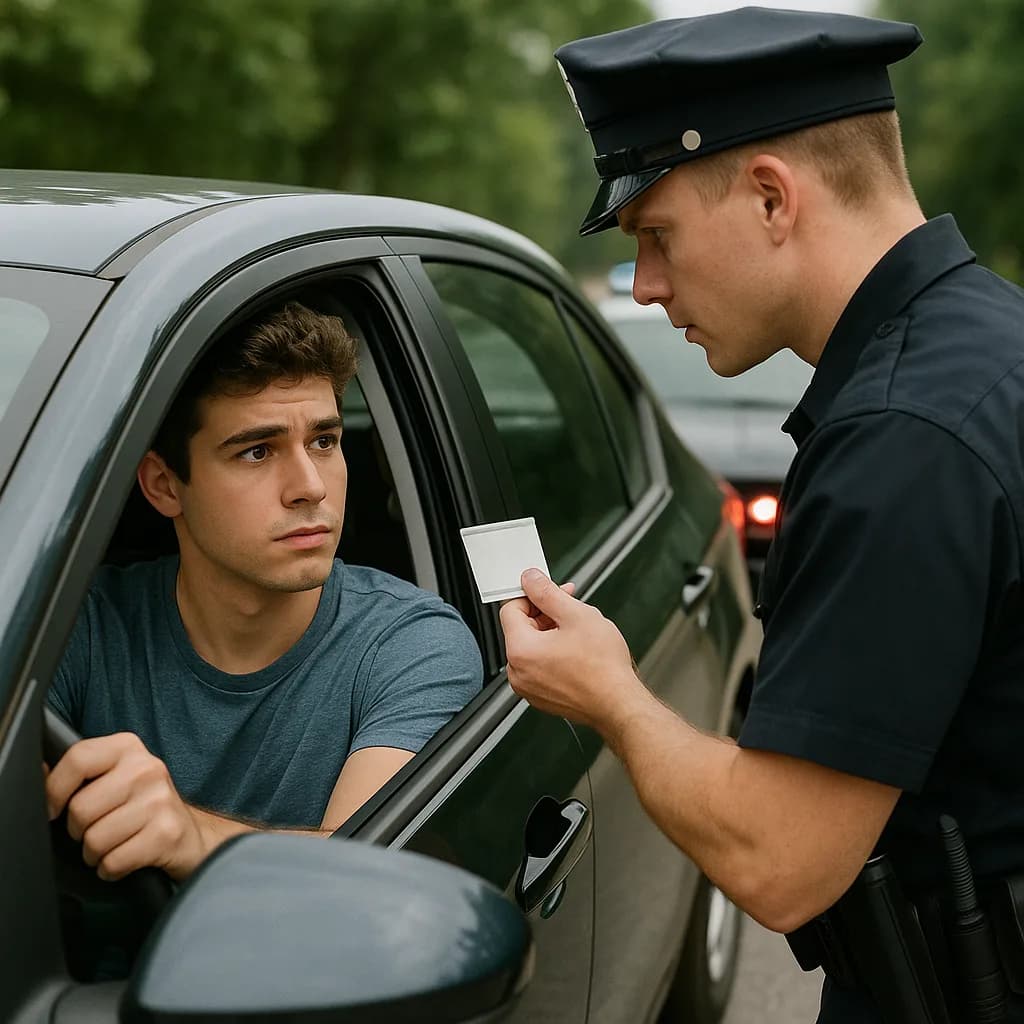
Montana law treats failure to provide proof of insurance during a traffic stop as a separate offense from driving without insurance. If you have active coverage but cannot show proof—because your phone died, you left your paper card at home, or the digital card won't load—the officer may issue a citation requiring you to present proof at the courthouse within 10 days. Once you show valid proof covering the date of the stop, the citation is typically dismissed with no fine.
Driving without insurance is a more serious violation. Montana Code Annotated 61-6-302 makes it illegal to operate a vehicle without at least the minimum liability coverage. A first offense carries a fine, potential license suspension, and a requirement to file SR-22 for 3 years. For households with multiple vehicles, this creates a timing trap: if you sell a car, cancel its coverage, and forget to transfer the policy to a replacement vehicle before driving the new car off the lot, you're operating without insurance even though you had coverage on the old car an hour earlier. The gap between canceling one policy and activating another must be zero—coverage on the new vehicle must be in force before you drive it.
Compare Carriers Writing Multi-Vehicle Policies in Montana
Fifteen carriers write auto insurance in Montana and accept multi-vehicle policies, including Allstate, Farmers, Geico, Progressive, State Farm, and USAA. Each issues digital insurance cards through a mobile app or online account, and all file coverage electronically with the Motor Vehicle Division's verification database. When you're insuring two or more vehicles, confirm that your carrier generates a separate card for each VIN and that those cards populate in the app before you need them at registration or during a stop.
The next step: compare carriers that write multi-vehicle policies in Montana and confirm that each vehicle on your policy has an active, VIN-specific insurance card you can access digitally or print. Verify coverage before registration, not at the county treasurer's counter.